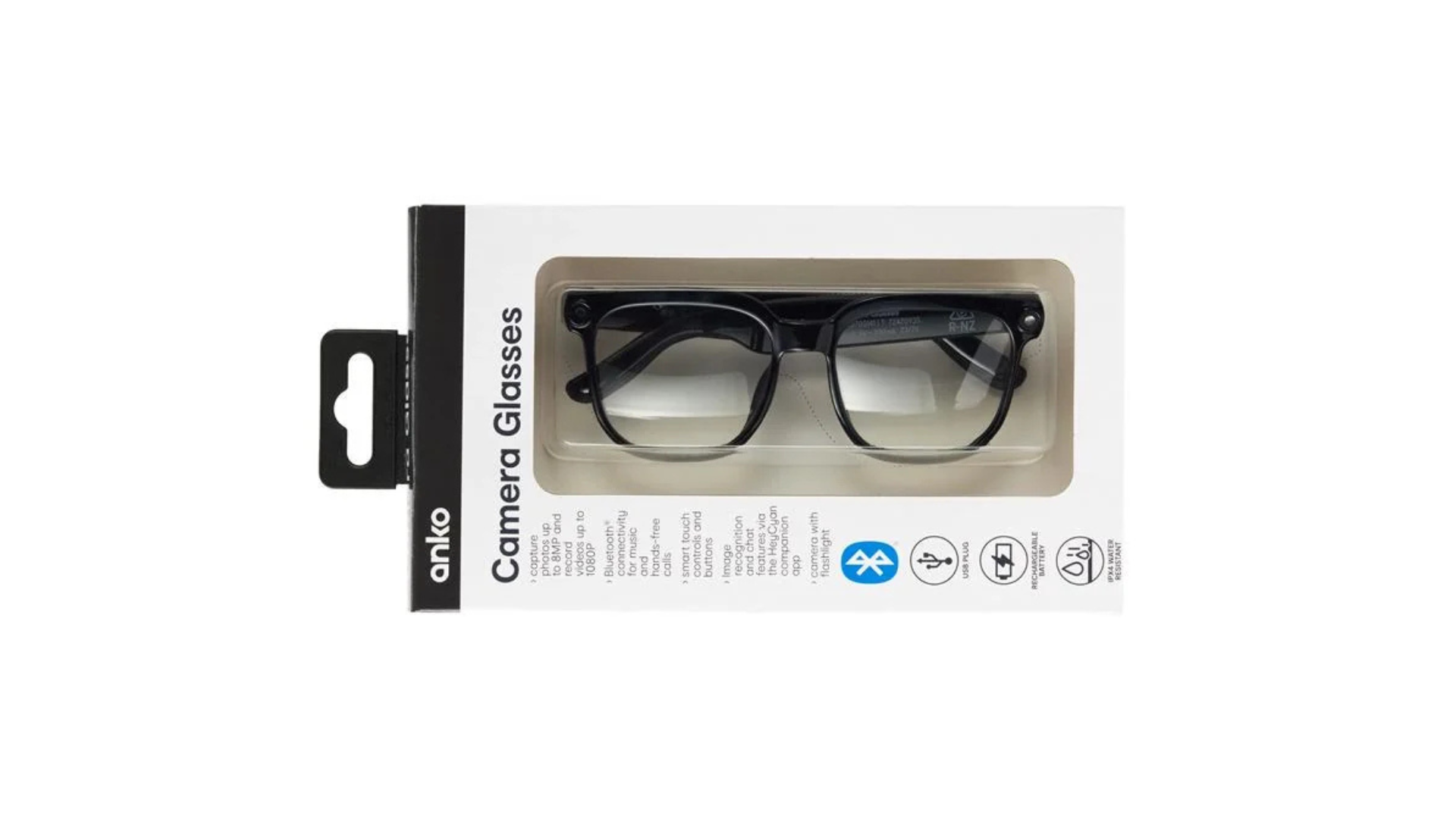
Australia’s privacy regulator has launched an investigation into the Chinese developer of a smartphone application used in smart glasses sold by Kmart and other Australian retailers, following concerns about how the technology handles personal information.
The Office of the Australian Information Commissioner (OAIC) is investigating Shenzhen Qingcheng Future Technology, the company behind the HeyCyan app, which supports Kmart’s Anko smart glasses and other lower-cost devices available through Big W Marketplace and Amazon.
The investigation follows preliminary inquiries launched in August into the privacy practices of smart glasses manufacturers, software developers and retailers, including Meta, Google, Kmart and Shenzhen Qingcheng.
The OAIC sought information about how the devices record data, who can access that information and where it is stored. Shenzhen Qingcheng did not respond to the regulator’s requests, prompting concerns about whether appropriate safeguards are in place to protect Australian users.
“In the absence of any response from Shenzhen Qingcheng to the OAIC’s preliminary inquiries, I have no assurance that it is protecting personal data of Australians as required by the Privacy Act,” said Privacy Commissioner Carly Kind.
The HeyCyan application connects compatible smart glasses to smartphones, enabling features such as phone calls, music playback and voice assistant functionality. Some of these features involve information captured by the glasses being transferred through the app for processing.
The investigation will examine the company’s privacy practices, procedures and systems, with the OAIC able to use compulsory information-gathering powers to obtain further details.
The regulator has also contacted retailers selling devices that use HeyCyan, raising concerns about the potential privacy risks associated with the products.
The investigation comes amid growing attention on wearable technologies capable of capturing images, audio and other information, including circumstances where people may be unaware they are being recorded.
In a separate statement, Commissioner Kind highlighted the challenges of applying existing privacy laws to smart glasses, particularly when responsibility for collecting and storing personal information sits with software providers rather than the companies manufacturing or selling the devices.
Under Australian privacy law, retailers may not be directly responsible for information collected through connected devices if they do not handle that information themselves. However, the OAIC has encouraged businesses to assess the privacy implications of the technology they make available to consumers.
The investigation could have implications for the wider smart glasses market as regulators examine how existing privacy protections apply to increasingly sophisticated wearable devices.
No finding of a privacy breach has been made against Shenzhen Qingcheng. The OAIC said it would not comment further until the investigation concludes.